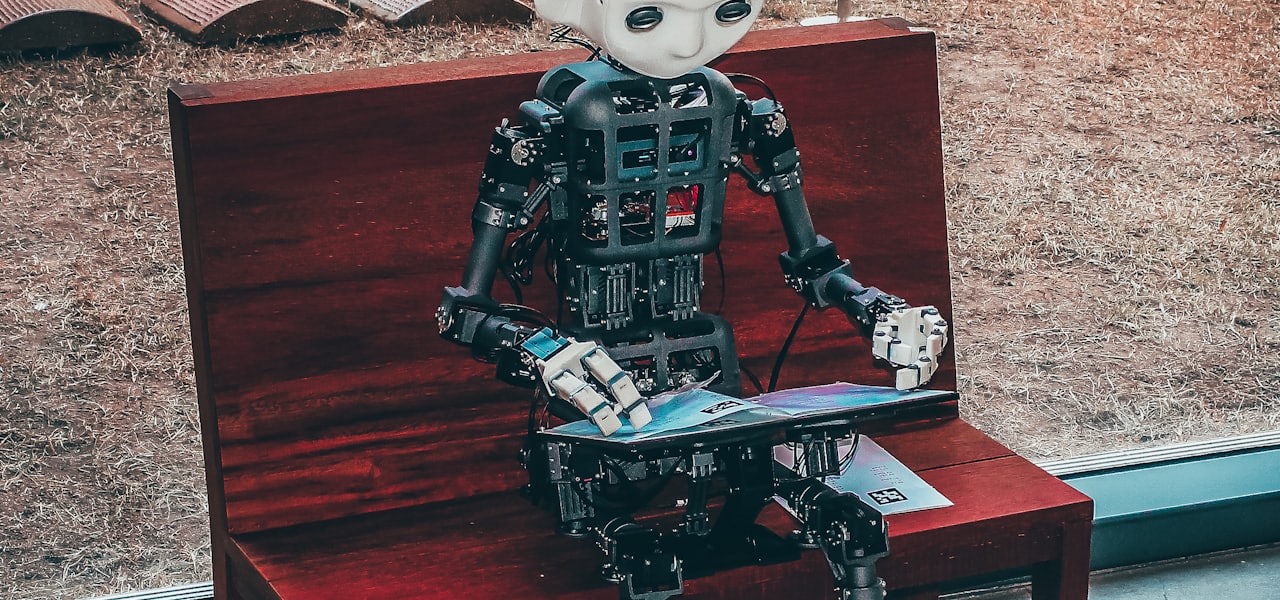
In image processing, computer vision and related fields, an image moment is a certain particular weighted average (moment) of the image pixels' intensities, or a function of such moments, usually chosen to have some attractive property or interpretation. Image moments are useful to describe objects after segmentation. Simple properties of the image which are found via image moments include area (or total intensity), its centroid, and information about its orientation. == Raw moments == For a 2D continuous function f(x,y) the moment (sometimes called "raw moment") of order (p + q) is defined as M p q = ∫ − ∞ ∞ ∫ − ∞ ∞ x p y q f ( x , y ) d x d y {\displaystyle M_{pq}=\int \limits _{-\infty }^{\infty }\int \limits _{-\infty }^{\infty }x^{p}y^{q}f(x,y)\,dx\,dy} for p,q = 0,1,2,... Adapting this to scalar (grayscale) image with pixel intensities I(x,y), raw image moments Mij are calculated by M i j = ∑ x ∑ y x i y j I ( x , y ) {\displaystyle M_{ij}=\sum _{x}\sum _{y}x^{i}y^{j}I(x,y)\,\!} In some cases, this may be calculated by considering the image as a probability density function, i.e., by dividing the above by ∑ x ∑ y I ( x , y ) {\displaystyle \sum _{x}\sum _{y}I(x,y)\,\!} A uniqueness theorem states that if f(x,y) is piecewise continuous and has nonzero values only in a finite part of the xy plane, moments of all orders exist, and the moment sequence (Mpq) is uniquely determined by f(x,y). Conversely, (Mpq) uniquely determines f(x,y). In practice, the image is summarized with functions of a few lower order moments. === Examples === Simple image properties derived via raw moments include: Area (for binary images) or sum of grey level (for greytone images): M 00 {\displaystyle M_{00}} Centroid: { x ¯ , y ¯ } = { M 10 M 00 , M 01 M 00 } {\displaystyle \{{\bar {x}},\ {\bar {y}}\}=\left\{{\frac {M_{10}}{M_{00}}},{\frac {M_{01}}{M_{00}}}\right\}} == Central moments == Central moments are defined as μ p q = ∫ − ∞ ∞ ∫ − ∞ ∞ ( x − x ¯ ) p ( y − y ¯ ) q f ( x , y ) d x d y {\displaystyle \mu _{pq}=\int \limits _{-\infty }^{\infty }\int \limits _{-\infty }^{\infty }(x-{\bar {x}})^{p}(y-{\bar {y}})^{q}f(x,y)\,dx\,dy} where x ¯ = M 10 M 00 {\displaystyle {\bar {x}}={\frac {M_{10}}{M_{00}}}} and y ¯ = M 01 M 00 {\displaystyle {\bar {y}}={\frac {M_{01}}{M_{00}}}} are the components of the centroid. If ƒ(x, y) is a digital image, then the previous equation becomes μ p q = ∑ x ∑ y ( x − x ¯ ) p ( y − y ¯ ) q f ( x , y ) {\displaystyle \mu _{pq}=\sum _{x}\sum _{y}(x-{\bar {x}})^{p}(y-{\bar {y}})^{q}f(x,y)} The central moments of order up to 3 are: μ 00 = M 00 , μ 01 = 0 , μ 10 = 0 , μ 11 = M 11 − x ¯ M 01 = M 11 − y ¯ M 10 , μ 20 = M 20 − x ¯ M 10 , μ 02 = M 02 − y ¯ M 01 , μ 21 = M 21 − 2 x ¯ M 11 − y ¯ M 20 + 2 x ¯ 2 M 01 , μ 12 = M 12 − 2 y ¯ M 11 − x ¯ M 02 + 2 y ¯ 2 M 10 , μ 30 = M 30 − 3 x ¯ M 20 + 2 x ¯ 2 M 10 , μ 03 = M 03 − 3 y ¯ M 02 + 2 y ¯ 2 M 01 . {\displaystyle {\begin{aligned}\mu _{00}&=M_{00},&\mu _{01}&=0,\\\mu _{10}&=0,&\mu _{11}&=M_{11}-{\bar {x}}M_{01}=M_{11}-{\bar {y}}M_{10},\\\mu _{20}&=M_{20}-{\bar {x}}M_{10},&\mu _{02}&=M_{02}-{\bar {y}}M_{01},\\\mu _{21}&=M_{21}-2{\bar {x}}M_{11}-{\bar {y}}M_{20}+2{\bar {x}}^{2}M_{01},&\mu _{12}&=M_{12}-2{\bar {y}}M_{11}-{\bar {x}}M_{02}+2{\bar {y}}^{2}M_{10},\\\mu _{30}&=M_{30}-3{\bar {x}}M_{20}+2{\bar {x}}^{2}M_{10},&\mu _{03}&=M_{03}-3{\bar {y}}M_{02}+2{\bar {y}}^{2}M_{01}.\end{aligned}}} It can be shown that: μ p q = ∑ m p ∑ n q ( p m ) ( q n ) ( − x ¯ ) ( p − m ) ( − y ¯ ) ( q − n ) M m n {\displaystyle \mu _{pq}=\sum _{m}^{p}\sum _{n}^{q}{p \choose m}{q \choose n}(-{\bar {x}})^{(p-m)}(-{\bar {y}})^{(q-n)}M_{mn}} Central moments are translational invariant. === Examples === Information about image orientation can be derived by first using the second order central moments to construct a covariance matrix. μ 20 ′ = μ 20 / μ 00 = M 20 / M 00 − x ¯ 2 μ 02 ′ = μ 02 / μ 00 = M 02 / M 00 − y ¯ 2 μ 11 ′ = μ 11 / μ 00 = M 11 / M 00 − x ¯ y ¯ {\displaystyle {\begin{aligned}\mu '_{20}&=\mu _{20}/\mu _{00}=M_{20}/M_{00}-{\bar {x}}^{2}\\\mu '_{02}&=\mu _{02}/\mu _{00}=M_{02}/M_{00}-{\bar {y}}^{2}\\\mu '_{11}&=\mu _{11}/\mu _{00}=M_{11}/M_{00}-{\bar {x}}{\bar {y}}\end{aligned}}} The covariance matrix of the image I ( x , y ) {\displaystyle I(x,y)} is now cov [ I ( x , y ) ] = [ μ 20 ′ μ 11 ′ μ 11 ′ μ 02 ′ ] . {\displaystyle \operatorname {cov} [I(x,y)]={\begin{bmatrix}\mu '_{20}&\mu '_{11}\\\mu '_{11}&\mu '_{02}\end{bmatrix}}.} The eigenvectors of this matrix correspond to the major and minor axes of the image intensity, so the orientation can thus be extracted from the angle of the eigenvector associated with the largest eigenvalue towards the axis closest to this eigenvector. It can be shown that this angle Θ is given by the following formula: Θ = 1 2 arctan ( 2 μ 11 ′ μ 20 ′ − μ 02 ′ ) {\displaystyle \Theta ={\frac {1}{2}}\arctan \left({\frac {2\mu '_{11}}{\mu '_{20}-\mu '_{02}}}\right)} The above formula holds as long as: μ 20 ′ − μ 02 ′ ≠ 0 {\displaystyle \mu '_{20}-\mu '_{02}\neq 0} The eigenvalues of the covariance matrix can easily be shown to be λ i = μ 20 ′ + μ 02 ′ 2 ± 4 μ ′ 11 2 + ( μ ′ 20 − μ ′ 02 ) 2 2 , {\displaystyle \lambda _{i}={\frac {\mu '_{20}+\mu '_{02}}{2}}\pm {\frac {\sqrt {4{\mu '}_{11}^{2}+({\mu '}_{20}-{\mu '}_{02})^{2}}}{2}},} and are proportional to the squared length of the eigenvector axes. The relative difference in magnitude of the eigenvalues are thus an indication of the eccentricity of the image, or how elongated it is. The eccentricity is 1 − λ 2 λ 1 . {\displaystyle {\sqrt {1-{\frac {\lambda _{2}}{\lambda _{1}}}}}.} == Moment invariants == Moments are well-known for their application in image analysis, since they can be used to derive invariants with respect to specific transformation classes. The term invariant moments is often abused in this context. However, while moment invariants are invariants that are formed from moments, the only moments that are invariants themselves are the central moments. Note that the invariants detailed below are exactly invariant only in the continuous domain. In a discrete domain, neither scaling nor rotation are well defined: a discrete image transformed in such a way is generally an approximation, and the transformation is not reversible. These invariants therefore are only approximately invariant when describing a shape in a discrete image. === Translation invariants === The central moments μi j of any order are, by construction, invariant with respect to translations. === Scale invariants === Invariants ηi j with respect to both translation and scale can be constructed from central moments by dividing through a properly scaled zero-th central moment: η i j = μ i j μ 00 ( 1 + i + j 2 ) {\displaystyle \eta _{ij}={\frac {\mu _{ij}}{\mu _{00}^{\left(1+{\frac {i+j}{2}}\right)}}}\,\!} where i + j ≥ 2. Note that translational invariance directly follows by only using central moments. === Rotation invariants === As shown in the work of Hu, invariants with respect to translation, scale, and rotation can be constructed: I 1 = η 20 + η 02 {\displaystyle I_{1}=\eta _{20}+\eta _{02}} I 2 = ( η 20 − η 02 ) 2 + 4 η 11 2 {\displaystyle I_{2}=(\eta _{20}-\eta _{02})^{2}+4\eta _{11}^{2}} I 3 = ( η 30 − 3 η 12 ) 2 + ( 3 η 21 − η 03 ) 2 {\displaystyle I_{3}=(\eta _{30}-3\eta _{12})^{2}+(3\eta _{21}-\eta _{03})^{2}} I 4 = ( η 30 + η 12 ) 2 + ( η 21 + η 03 ) 2 {\displaystyle I_{4}=(\eta _{30}+\eta _{12})^{2}+(\eta _{21}+\eta _{03})^{2}} I 5 = ( η 30 − 3 η 12 ) ( η 30 + η 12 ) [ ( η 30 + η 12 ) 2 − 3 ( η 21 + η 03 ) 2 ] + ( 3 η 21 − η 03 ) ( η 21 + η 03 ) [ 3 ( η 30 + η 12 ) 2 − ( η 21 + η 03 ) 2 ] {\displaystyle I_{5}=(\eta _{30}-3\eta _{12})(\eta _{30}+\eta _{12})[(\eta _{30}+\eta _{12})^{2}-3(\eta _{21}+\eta _{03})^{2}]+(3\eta _{21}-\eta _{03})(\eta _{21}+\eta _{03})[3(\eta _{30}+\eta _{12})^{2}-(\eta _{21}+\eta _{03})^{2}]} I 6 = ( η 20 − η 02 ) [ ( η 30 + η 12 ) 2 − ( η 21 + η 03 ) 2 ] + 4 η 11 ( η 30 + η 12 ) ( η 21 + η 03 ) {\displaystyle I_{6}=(\eta _{20}-\eta _{02})[(\eta _{30}+\eta _{12})^{2}-(\eta _{21}+\eta _{03})^{2}]+4\eta _{11}(\eta _{30}+\eta _{12})(\eta _{21}+\eta _{03})} I 7 = ( 3 η 21 − η 03 ) ( η 30 + η 12 ) [ ( η 30 + η 12 ) 2 − 3 ( η 21 + η 03 ) 2 ] − ( η 30 − 3 η 12 ) ( η 21 + η 03 ) [ 3 ( η 30 + η 12 ) 2 − ( η 21 + η 03 ) 2 ] . {\displaystyle I_{7}=(3\eta _{21}-\eta _{03})(\eta _{30}+\eta _{12})[(\eta _{30}+\eta _{12})^{2}-3(\eta _{21}+\eta _{03})^{2}]-(\eta _{30}-3\eta _{12})(\eta _{21}+\eta _{03})[3(\eta _{30}+\eta _{12})^{2}-(\eta _{21}+\eta _{03})^{2}].} These are well-known as Hu moment invariants. The first one, I1, is analogous to the moment of inertia around the image's centroid, where the pixels' intensities are analogous to physical density. The first six, I1 ... I6, are reflection symmetric, i.e. they are unchanged if the image is changed to a mirror image. The last one, I7, is reflection antisymmetric (changes sign under reflection), which enables it to distinguish mirror images of otherwise identical im
Bring your own encryption
Bring your own encryption (BYOE), also known as bring your own key (BYOK), is a cloud computing security model that allows cloud service customers to use their own encryption software and manage their own encryption keys. == Overview == BYOE enables cloud service customers to utilize a virtual instance of their encryption software alongside their cloud-hosted business applications to encrypt their data. In this model, hosted business applications are configured to process all data through the encryption software. This software then writes the ciphertext version of the data to the cloud service provider's physical data store and decrypts ciphertext data upon retrieval requests. This approach provides enterprises with control over their keys and the ability to generate their own master key using internal hardware security modules (HSM), which are then transmitted to the cloud provider's HSM. When the data is no longer needed, such as when users discontinue the cloud service, the keys can be deleted, rendering the encrypted data permanently inaccessible. This practice is known as crypto-shredding. == Potential Advantages == Organizations can store data with unique encryption that only they can access. Multiple organizations can share the same hardware infrastructure via cloud services like Amazon Web Services (AWS) or Google Cloud while maintaining encryption to comply with regulations such as HIPAA. == Potential Challenges == Resource utilization may be higher compared to traditional encryption practices when multiple users share the same hardware and use their own encryption. Efforts to minimize resource utilization issues may potentially impact security benefits.
Alexey Chervonenkis
Alexey Yakovlevich Chervonenkis (Russian: Алексей Яковлевич Червоненкис; 7 September 1938 – 22 September 2014) was a Soviet and Russian mathematician. Along with Vladimir Vapnik, he was one of the main developers of the Vapnik–Chervonenkis theory, also known as the "fundamental theory of learning", an important part of computational learning theory. Chervonenkis held joint appointments with the Russian Academy of Sciences and Royal Holloway, University of London. Alexey Chervonenkis got lost in Losiny Ostrov National Park on 22 September 2014, and later during a search operation was found dead near Mytishchi, a suburb of Moscow. He had died of hypothermia.
Infomax
Infomax', or the principle of maximum information preservation, is an optimization principle for artificial neural networks and other information processing systems. It prescribes that a function that maps a set of input values x {\displaystyle x} to a set of output values z ( x ) {\displaystyle z(x)} should be chosen or learned so as to maximize the average Shannon mutual information between x {\displaystyle x} and z ( x ) {\displaystyle z(x)} , subject to a set of specified constraints and/or noise processes. Infomax algorithms are learning algorithms that perform this optimization process. The principle was described by Linsker in 1988. The objective function is called the InfoMax objective. As the InfoMax objective is difficult to compute exactly, a related notion uses two models giving two outputs z 1 ( x ) , z 2 ( x ) {\displaystyle z_{1}(x),z_{2}(x)} , and maximizes the mutual information between these. This contrastive InfoMax objective is a lower bound to the InfoMax objective. Infomax, in its zero-noise limit, is related to the principle of redundancy reduction proposed for biological sensory processing by Horace Barlow in 1961, and applied quantitatively to retinal processing by Atick and Redlich. == Applications == (Becker and Hinton, 1992) showed that the contrastive InfoMax objective allows a neural network to learn to identify surfaces in random dot stereograms (in one dimension). One of the applications of infomax has been to an independent component analysis algorithm that finds independent signals by maximizing entropy. Infomax-based ICA was described by (Bell and Sejnowski, 1995), and (Nadal and Parga, 1995).
Cellular neural network
In computer science and machine learning, Cellular Neural Networks (CNN) or Cellular Nonlinear Networks (CNN) are a parallel computing paradigm similar to neural networks, with the difference that communication is allowed between neighbouring units only. Typical applications include image processing, analyzing 3D surfaces, solving partial differential equations, reducing non-visual problems to geometric maps, modelling biological vision and other sensory-motor organs. CNN is not to be confused with convolutional neural networks (also colloquially called CNN). == CNN architecture == Due to their number and variety of architectures, it is difficult to give a precise definition for a CNN processor. From an architecture standpoint, CNN processors are a system of finite, fixed-number, fixed-location, fixed-topology, locally interconnected, multiple-input, single-output, nonlinear processing units. The nonlinear processing units are often referred to as neurons or cells. Mathematically, each cell can be modeled as a dissipative, nonlinear dynamical system where information is encoded via its initial state, inputs and variables used to define its behavior. Dynamics are usually continuous, as in the case of Continuous-Time CNN (CT-CNN) processors, but can be discrete, as in the case of Discrete-Time CNN (DT-CNN) processors. Each cell has one output, by which it communicates its state with both other cells and external devices. Output is typically real-valued, but can be complex or even quaternion, i.e. a Multi-Valued CNN (MV-CNN). Most CNN processors, processing units are identical, but there are applications that require non-identical units, which are called Non-Uniform Processor CNN (NUP-CNN) processors, and consist of different types of cells. === Chua-Yang CNN === In the original Chua-Yang CNN (CY-CNN) processor, the state of the cell was a weighted sum of the inputs and the output was a piecewise linear function. However, like the original perceptron-based neural networks, the functions it could perform were limited: specifically, it was incapable of modeling non-linear functions, such as XOR. More complex functions are realizable via Non-Linear CNN (NL-CNN) processors. Cells are defined in a normed gridded space like two-dimensional Euclidean geometry. However, the cells are not limited to two-dimensional spaces; they can be defined in an arbitrary number of dimensions and can be square, triangle, hexagonal, or any other spatially invariant arrangement. Topologically, cells can be arranged on an infinite plane or on a toroidal space. Cell interconnect is local, meaning that all connections between cells are within a specified radius (with distance measured topologically). Connections can also be time-delayed to allow for processing in the temporal domain. Most CNN architectures have cells with the same relative interconnects, but there are applications that require a spatially variant topology, i.e. Multiple-Neighborhood-Size CNN (MNS-CNN) processors. Also, Multiple-Layer CNN (ML-CNN) processors, where all cells on the same layer are identical, can be used to extend the capability of CNN processors. The definition of a system is a collection of independent, interacting entities forming an integrated whole, whose behavior is distinct and qualitatively greater than its entities. Although connections are local, information exchange can happen globally through diffusion. In this sense, CNN processors are systems because their dynamics are derived from the interaction between the processing units and not within processing units. As a result, they exhibit emergent and collective behavior. Mathematically, the relationship between a cell and its neighbors, located within an area of influence, can be defined by a coupling law, and this is what primarily determines the behavior of the processor. When the coupling laws are modeled by fuzzy logic, it is a fuzzy CNN. When these laws are modeled by computational verb logic, it becomes a computational verb CNN. Both fuzzy and verb CNNs are useful for modelling social networks when the local couplings are achieved by linguistic terms. == History == The idea of CNN processors was introduced by Leon Chua and Lin Yang in 1988. In these articles, Chua and Yang outline the underlying mathematics behind CNN processors. They use this mathematical model to demonstrate, for a specific CNN implementation, that if the inputs are static, the processing units will converge, and can be used to perform useful calculations. They then suggest one of the first applications of CNN processors: image processing and pattern recognition (which is still the largest application to date). Leon Chua is still active in CNN research and publishes many of his articles in the International Journal of Bifurcation and Chaos, of which he is an editor. Both IEEE Transactions on Circuits and Systems and the International Journal of Bifurcation also contain a variety of useful articles on CNN processors authored by other knowledgeable researchers. The former tends to focus on new CNN architectures and the latter more on the dynamical aspects of CNN processors. In 1993, Tamas Roska and Leon Chua introduced the first algorithmically programmable analog CNN processor in the world. The multi-national effort was funded by the Office of Naval Research, the National Science Foundation, and the Hungarian Academy of Sciences, and researched by the Hungarian Academy of Sciences and the University of California. This article proved that CNN processors were producible and provided researchers a physical platform to test their CNN theories. After this article, companies started to invest into larger, more capable processors, based on the same basic architecture as the CNN Universal Processor. Tamas Roska is another key contributor to CNNs. His name is often associated with biologically inspired information processing platforms and algorithms, and he has published numerous key articles and has been involved with companies and research institutions developing CNN technology. === Literature === Two references are considered invaluable since they manage to organize the vast amount of CNN literature into a coherent framework: An overview by Valerio Cimagalli and Marco Balsi. The paper provides a concise intro to definitions, CNN types, dynamics, implementations, and applications. "Cellular Neural Networks and Visual Computing Foundations and Applications", written by Leon Chua and Tamas Roska, which provides examples and exercises. The book covers many different aspects of CNN processors and can serve as a textbook for a Masters or Ph.D. course. Other resources include The proceedings of "The International Workshop on Cellular Neural Networks and Their Applications" provide much CNN literature. The proceedings are available online, via IEEE Xplore, for conferences held in 1990, 1992, 1994, 1996, 1998, 2000, 2002, 2005 and 2006. There was also a workshop held in Santiago de Composetela, Spain. Topics included theory, design, applications, algorithms, physical implementations and programming and training methods. For an understanding of the analog semiconductor based CNN technology, AnaLogic Computers has their product line, in addition to the published articles available on their homepage and their publication list. They also have information on other CNN technologies such as optical computing. Many of the commonly used functions have already been implemented using CNN processors. A good reference point for some of these can be found in image processing libraries for CNN based visual computers such as Analogic’s CNN-based systems. == Related processing architectures == CNN processors could be thought of as a hybrid between artificial neural network (ANN) and Continuous Automata (CA). === Artificial Neural Networks === The processing units of CNN and NN are similar. In both cases, the processor units are multi-input, dynamical systems, and the behavior of the overall systems is driven primarily through the weights of the processing unit’s linear interconnect. However, in CNN processors, connections are made locally, whereas in ANN, connections are global. For example, neurons in one layer are fully connected to another layer in a feed-forward NN and all the neurons are fully interconnected in Hopfield networks. In ANNs, the weights of interconnections contain information on the processing system’s previous state or feedback. But in CNN processors, the weights are used to determine the dynamics of the system. Furthermore, due to the high inter-connectivity of ANNs, they tend not exploit locality in either the data set or the processing and as a result, they usually are highly redundant systems that allow for robust, fault-tolerant behavior without catastrophic errors. A cross between an ANN and a CNN processor is a Ratio Memory CNN (RMCNN). In RMCNN processors, the cell interconnect is local and topologically invariant, but the weights are used to store
Spotify Kids
Spotify Kids is a Swedish kid-friendly Music streaming service developed by Spotify. It offers curated content for children, including music, audiobooks, lullabies, and bedtime stories, while providing their parents with parental controls. The service is only available to subscribers to Spotify's Premium Family subscription plan. == Function == Spotify Kids is a Swedish Kid-friendly Music Streaming Service that allows children to browse Spotify with parental controls. Using the app, parents can view their children's listening history, block specific songs, and share playlists with their children. The app also includes sing-along songs, playlists designed for young children, and curated audiobooks, lullabies, and bedtime stories. Access is included in Spotify's Premium Family subscription plan, and is exclusive to subscribers to the plan. Users can configure the app for a specific age group upon first launch. The playlists on Spotify Kids are curated by groups including Discovery Kids, Nickelodeon, Universal Pictures, and The Walt Disney Company. All content on the Spotify Kids app is curated by editors. As of March 2021, there were roughly 8,000 songs available on the platform. The design of the Spotify Kids app is colorful, and user interface varies depending on the age group for which the app is configured. Spotify Kids is designed to comply with consent and data collection regulations for apps used by children. TechCrunch explains that it is "designed on a grand scale to drive subscriptions to Spotify's top-tier $14.99-per-month Premium Family Plan." == Release == After being beta tested in Ireland in October 2019, it was released as a beta across the United Kingdom on February 11, 2020. It was later released in Sweden, Denmark, Australia, New Zealand, Mexico, Argentina, and Brazil. On March 31, 2021, it was made available in France, Canada, and the United States.
Writesonic
Writesonic is an AI visibility and generative engine optimization (GEO) platform used by enterprises, digital agencies, direct-to-consumer (D2C) companies, and fast-growing brands to understand and improve how they are represented in AI-generated search and answer systems. The platform analyzes how brands appear in AI answers, compares their visibility and citations against competitors, and provides tools to create and optimize on-site content and secure mentions across third-party sources, discussion forums, and user-generated platforms that influence AI outputs. == History == Writesonic was founded by Samanyou Garg in October 2020 in San Francisco, California. The company initially operated as Magicflow before adopting its current name. In its seed round, the company raised $2.5 million from investors including Y-Combinator, HOF Capital, and Soma Capital. The company began with AI-powered content generation tools. In 2023, it expanded into AI-enhanced search engine optimization. In 2024, the company launched an AI agent specifically designed for SEO tasks, with integrations to platforms including Ahrefs, Google Keyword Planner, Keywords Everywhere, and Google Search Console. This was among the first specialized AI agents developed for SEO automation. Around the same time, Writesonic expanded its product line into Generative engine optimization (GEO), developing tools to analyze and improve how brands are represented in AI-generated search and answer environments. However, it is currently being challenged in the market with competitors such as Profound (known for their dashboards) and Meridian (known for their execution). == Technology and features == In 2024, the company introduced an artificial intelligence agent designed to automate search engine optimization (SEO) tasks. The agent integrates with platforms such as Ahrefs, Google Keyword Planner, Keywords Everywhere, and Google Search Console to conduct technical audits, perform keyword research, carry out competitive analysis, and assist in strategy development. It is capable of identifying content gaps, suggesting optimization measures, and generating SEO strategies using real-time data from the integrated platforms. The platform also includes features for content strategy, optimization, and management. It makes use of large language models such as GPT-5, Claude Opus 4.1, and Claude Sonnet 4.5, in combination with proprietary workflows for fact-checking, internal linking, and content structure optimization.